Build Your Handyman Service List
Direct answer: A service list is a written list of every job you know how to do and have the tools for. Start from a full jobs list, mark each item yes or no, add the work you do that isn't on it, and take off anything that needs a license or permit where you work. Keep it ready, because the first thing a new client asks is what you can do.
Everything below comes from Ray Duke's own videos. Ray has run his handyman business for property managers since 2020.
- 550 items on Ray's full handyman jobs list
- Half of Ray's early jobs were ones he had never done before
- 4 questions to check before work goes on your list
Why you need it in writing
Clients, and property managers most of all, want to know what kind of work they can send you. A written list answers that in one page and makes you look like a business.
When you're approaching new clients, one of their very big questions for you is going to be: what can you do? What work are you good at? They need to know what kind of work they can send you if they want to send you work.
Next thing you're going to do is make a list of all of the jobs that you know how to do and that you have the tools for.
Build it in five steps
What you do is you take this list and just go through and figure out which items on that list you know how to do and which ones you don't know how to do. Then you can make your own list ... start with my list, make your own list and start adding your pricing values to that as well.
Use my list, go down and make your own list of everything on my list that you know how to do, and then anything I don't have on the list that you do, you can also add that. For example ... I don't have things like furniture assembly. Property managers don't ask handymen to assemble furniture. That's something a homeowner might ask someone to do.
- Start from a full list, not a blank page: Use a long list of handyman jobs, like Ray's free jobs list (about 550 items, sorted by category) or the template below. A blank page makes you forget half of what you can do.
- Mark every item yes or no: Go line by line. Yes means you know how to do it and you own the tools for it. Anything else is a no for now.
- Add the work you do that isn't listed: Ray's list is built around property-manager work. If you do work it leaves out, add it.
- Check each yes against your local rules: Take off anything that needs a license or a permit where you work (see the legal section below).
- Add your prices later: Once the list is set, start putting a price next to each job. That turns your service list into your price list.
Pick who you serve first, then shape the list
Your list depends on your clients. Furniture assembly belongs on a homeowner list, not a property-manager list. Decide who you work for (homeowners, property managers, realtors, commercial) and keep the jobs those clients actually call about.
If you think you're going to be this overall handyman who can be everything to everybody, you cannot do that well and you cannot do that affordably. You cannot do that profitably. You need to know what kind of handyman business you're building so that you can find the correct clients and specialize on suiting their needs.
A handyman is expected to have a general knowledge of all of the skill sets ... So what this means is that since we cannot niche down on a specific skill set, then what we're going to have to do is niche down on the types of projects that we take on and on the clients that we take on.
Work you don't know how to do yet
A no today can be a yes later. Ray learned many jobs on the job. Put the ones you want to learn on a separate list and work through it.
Half the jobs that I did for my property managers, fully half of them at least in the beginning, were jobs I'd never done before.
- Tile: Ray: tile is in very high demand and "very very lucrative." His advice is to learn it if you want to make a lot of money.
- Floating floors: Ray calls click-together laminate and vinyl plank floors a job "you can pull off with zero experience," the easiest way to offer new floors.
- Masonry: Good masons are hard to find, so Ray says you can charge a premium for brick, block and stone work.
- Welding: A skill Ray doesn't have and subcontracts out. He calls it a rare skill that pays well.
Legal limits: check before a job goes on the list
What a handyman may do without a license changes by state, county and city. Don't guess and don't trust a rule of thumb. Ray's four questions for every job:
- Look up your state: handyman license requirements by state.
- Electrical work has its own rules: can a handyman do electrical work?
- Check again from time to time. Ray reminds viewers that regulations change and that you have to verify the rules yourself.
Rather than relying on heuristics like if it ain't behind the wall, I can work on it. Or I can just break the job up into multiple small jobs to get around the threshold. Or I can work under my buddy's license. Instead, I'm going to tell you how to actually determine what you can and cannot do legally in your state.
My advice is call your Registrar of contractors and actually just ask them, you know, and see if you can speak to an investigator, because they're the ones who'll know.
- Does it need a permit?: Look it up with your city, county and state. Most publish a list of work that needs a permit. If it needs a permit, assume you can't do it without a license.
- Is it over your state's price limit?: Most states set a dollar amount for unlicensed work, and Ray notes it includes materials. Find your state's number and keep every job under it.
- Does your state regulate the trade anyway?: Some states won't let an unlicensed handyman swap even a light fixture or a faucet. Read your state's law.
- Are there special local rules?: Reservations, military bases and special business districts can add their own rules. Know which ones are in your service area.
Jobs to think twice about
A yes isn't always a good idea. Ray's own notes on jobs he limits or avoids:
- Glue-down vinyl: Ray: "the glue down vinyl is a horrible product please don't ever learn how to do that and don't offer that service."
- Popcorn ceiling removal: Older popcorn can contain asbestos. Ray suggests you pass and tell the client you don't have the hazardous-material certification for it.
- Roofing: Ray: it "will increase your insurance a lot." If you don't do many roofing jobs and your insurance is too high, take it off.
- Appliance repair: Ray keeps it on his list but steers clients toward a new install, and charges the first trip as diagnosis only.
Template service list
Built from the categories and jobs Ray walks through in his 2025 jobs list video. Mark each line yes or no, then add your own.
Checklist
- DOORS: interior and exterior slabs, hinges, locks, latches, knobs, levers and deadbolts; bypass and bifold closet doors; French, pocket, barn and accordion doors; shower doors (wheels, seals); sliding glass door wheels; screen and security doors; door stops and self-closers; garage door weather stripping
- PLUMBING, KITCHEN: shutoff valves, supply lines, faucets and sprayers, sink basins and strainers, drain lines, garbage disposals, snaking drains, filtration systems, dishwasher mounting, leaks and drain lines
- PLUMBING, BATH: sink pop-up stoppers, shower heads and arms, valve stems and cartridges, tub spouts and overflow drains, toilet fill valves, flappers, tank lids, flush levers, tank-to-bowl seals, wax rings and flanges
- PLUMBING, OTHER: hose bibs, water heater pilot and temperature, water softener salt, pipe repair (copper, PVC, CPVC, ABS, galvanized, PEX)
- APPLIANCES: remove and install; fridge supply lines, ice makers, shelves and drawers; washer supply lines; dryer plugs and vent cleaning; range anti-tip devices, coils, burners; microwave and range hood filters, bulbs, fans
- ELECTRICAL (where legal for you): outlets and GFCI outlets, switches and three-way switches, ceiling fans (pull chains, globes, remotes, rated boxes), light fixtures and bulbs, motion and photo sensors, bath humidity switches, smoke and CO detectors, doorbells, cover plates
- WINDOWS: single-pane glass, locks, springs and balances, casement cranks, screens, blinds and curtains
- CABINETS: doors and hinges, drawers and rails, drawer box rebuilds, sink cabinet floors, countertops, toe kicks
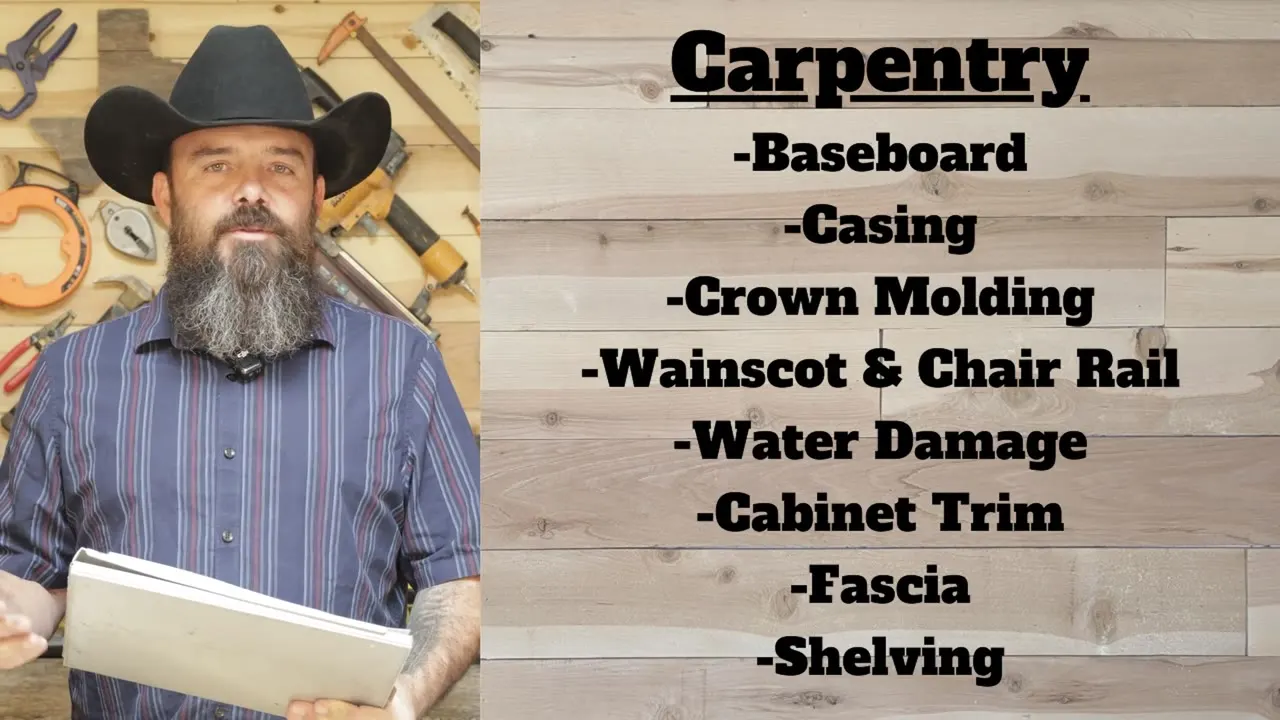
- CARPENTRY: baseboard, door and window casing, crown molding, wainscot, chair rail, closet shelving, fascia
- TILE: floor repairs, backsplashes, shower and tub surrounds, grout and sealing
- FLOORING: carpet patches, stretching, tack strip and transitions; vinyl repair; floating laminate and vinyl plank; minor hardwood repair
- WALLS AND CEILINGS: drywall patches and replacement, texture matching (orange peel, knockdown and others), patch and paint, plaster patches, ceiling tile, popcorn repair
- WALL ACCESSORIES: TV mounts, towel bars, rings and hooks, TP holders, grab bars, banisters, shelving, closet rods, AC registers
- ROOF AND EXTERIOR: flat, shingle and tile roof patches, chimney and parapet sealing, vent caps, skylight domes, gutters and scuppers
- MASONRY: brick, block and stone repair, small slabs and footings
- OUTSIDE: wood, wire and chain-link fencing, mailboxes and posts, pressure washing, decks (rot repair, refinishing), junk removal
Put the list to work
Your finished list goes in the package you hand to new clients, next to your pricing. Ray tells new handymen to have their pricing in writing too and know it well enough to answer in person.
Make your own list, use my list to make your list, and have a list of every single job that you do in your package. Next, pricing structure. Guys, you need to know what your pricing structure is.
Step-by-Step
- Start from a full jobs list — Use a long list of handyman jobs sorted by category instead of a blank page.
- Mark each item yes or no — Yes only if you know how to do it and own the tools for it.
- Add work that isn't listed — Add the jobs your clients ask for that the list leaves out.
- Check local rules — Remove any job that needs a permit or license where you work, or is over your state's limit for unlicensed work.
- Add prices and use it — Put a price on each job and include the list in the package you give new clients.
Frequently Asked Questions
What should be on a handyman service list?
Every job you know how to do and have the tools for, sorted by category: doors, plumbing, appliances, electrical where it's legal for you, windows, cabinets, carpentry, tile, flooring, walls, roof and exterior. Use the template on this page as a starting point.
Should I list jobs I've never done?
List what you can do now. Keep a second list of jobs you want to learn. Ray says half of his early property-manager jobs were new to him, so the list grows as you learn.
How do I know what I'm allowed to do without a license?
Ask four questions about each job: does it need a permit, is it over your state's price limit for unlicensed work, does your state regulate that trade anyway, and are there special local rules. Look up your own city, county and state, or call your state's contractor licensing office.
Should I offer every service I can do?
No. Shape the list around the clients you serve. Ray takes some work off or limits it, like glue-down vinyl, popcorn removal and roofing when it raises insurance too much.