When and How to Hire Your First Handyman Helper
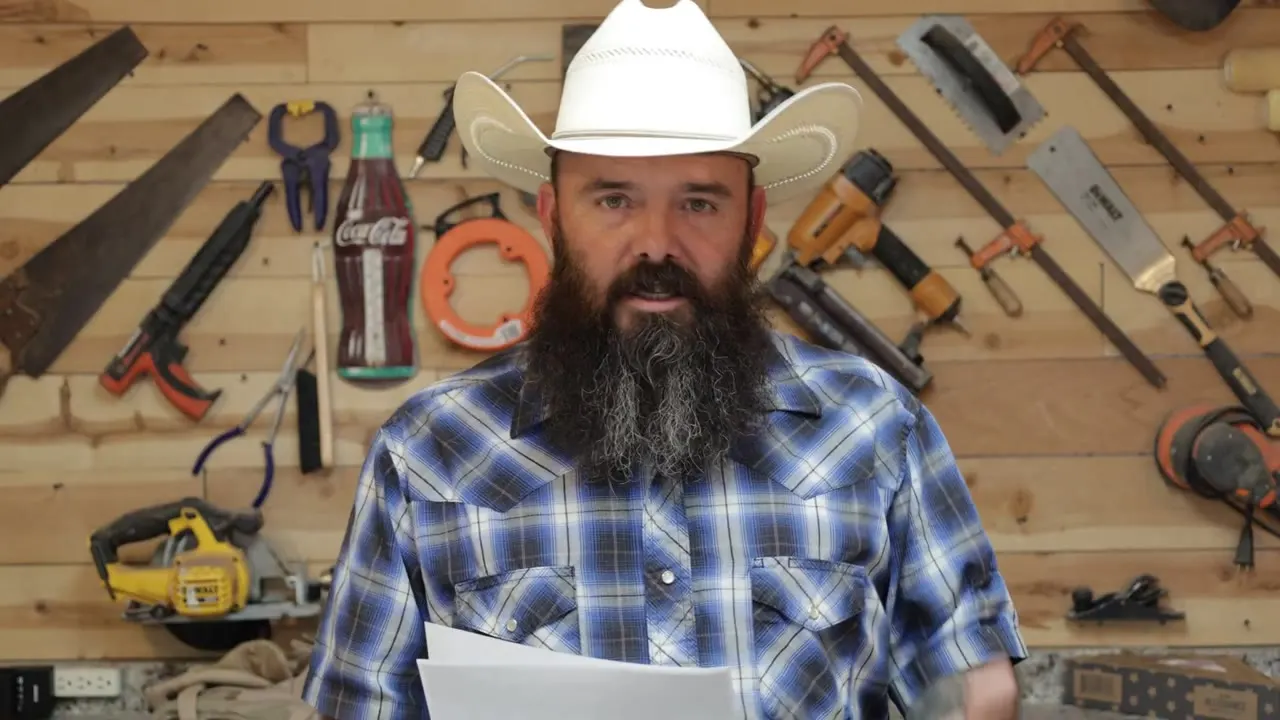
Direct answer: Hire when clients are waiting on you, your income and savings are steady, and you have enough work to keep someone productively busy all day. Before you hire, build the kits and written steps a new person can follow. Ray's advice is to hire a good person you can train, not a skilled tradesman, and to make them a W-2 employee if you can manage them.
Ray's advice comes from his own videos. The worker-classification and hiring facts come from the IRS's own pages, linked below (read November 21, 2026). This is not tax or legal advice.
- 2x work done after Ray made his helper a W-2 employee
- 8 hours of productive work a day you need to keep an employee busy
- 30 minutes Ray says it took to set up payroll
Signs it's time
So two things really needed to happen. Number one, I needed to make more money and I needed to make more money so I could have a nest egg, and at least the nest egg could get me through temporary illnesses and injuries. That's the first thing. And then number two though, as soon as I get that accomplished, the next step is going to be clearly to start creating some systems in place where I can plug other people into those systems.
If you can keep an employee busy for that eight hours, productively busy, not just busy work, but actual productive busy work. If you can do that, W-2 employee is a way to go, 100%.
- Clients are waiting: If you can barely get to everyone, clients wait, and Ray says clients don't enjoy waiting.
- Your income is steady: Ray's order: first make enough money to build a nest egg that can carry you through an illness or injury, then build systems so others can do the work.
- There's a full day of work: An employee pays off when you can keep them productively busy for the whole day, not on busy work.
- Your systems are ready: Kits, inventories and written steps exist for the jobs you'll hand off. See SOPs and checklists.
Build these before you hire
I got my handyman headquarters because that's the first step to me hiring somebody ... But I recognize that if I want to hire soon, I can't have an employee showing up at my house eight o'clock every morning. Because you lose the privacy of your house.
If I feel like I could hire any 16-year-old boy to do this job, then I think I could train anybody, anybody in the world to do that job. And then I want to put together kits just for those jobs, the ones that are very much standardized, like a toilet fill valve.
- A place that isn't your house: Ray rented a separate space for tools and materials before hiring, so an employee isn't showing up at his home every morning.
- Kits and written steps: Build a kit and a written process for each job you'll hand off: the tools in the van, the hand tools in the bag, the parts in the kit.
- Pick the jobs a beginner can learn: Go through your jobs list and mark the predictable ones, like a toilet fill valve. Ray's test: could you train any 16-year-old to do it?
- Then hire a good person and train them: Teach the new hire those jobs first, from your kits and steps.
Hire a good person, not a master tradesman
It sounds backward, but Ray doesn't want to hire an experienced handyman first. Someone who can do everything on their own costs more than you can pay and doesn't need your business.
So if and when it's time to hire employees, what you want to be able to do is hire any average intelligence American who can be trained and train them on your processes and your procedures and your kits and your inventories. If you have to hire somebody who's skilled enough to show up to every job and figure everything out on their own ... those people are going to be number one too expensive for you, but number two, they don't need you.
And I'm really focused on these kits because when I hire, I do not want to hire an experienced handyman.
Employee or subcontractor: what Ray found
Early on, Ray wanted only independent subcontractors. His son worked for him as a 1099 contractor, paid a share of the labor. When Ray caught corners being cut, he made his son a W-2 employee instead: Monday to Friday, 8 to 5, Ray's vehicle, Ray's tools, Ray doing the scheduling.
- Ray uses a subcontractor today because his time goes to his YouTube channel and coaching. He says a W-2 employee would still be more valuable to him if he only ran the handyman business.
- On slow days, his employee organized tools, cleaned out vehicles and painted, so the hours were still used.
The number of jobs that started getting done on a daily basis, which means the experience of my clients in terms of how fast my company is accomplishing the work that they asked us to accomplish, it doubled. We got twice as much work done on a per day or per month or per week basis, twice as much easily. And not only that, but it cost me less, even paying him $30 an hour.
So, you know, my answer to the question, W-2 employee or 1099 contractor ... is my opinion is W-2 employee all the way. If you can manage people, and I don't mean be a boss and tell them, get it done. I just mean if you can manage people, if you can like, if you have that skill of management, then and you can keep them busy and you can keep them occupied.
How you pay changes how they work
Ray's view: paying by the piece or by commission rewards speed, and hourly pay rewards care. Because he bills well above what he pays per hour, a slower, careful employee still makes him money and keeps clients happy.
If you're getting paid piecework, commission or whatever, instead of hourly, it's to your benefit. You are by default incentivized ... the incentive is to cut corners to be faster.
Subcontractors still have a place
Subcontracting overflow or specialty work to other reliable tradesmen gets clients served faster and earns you a margin on work you didn't do yourself. The relationship goes both ways.
I do highly suggest finding some reliable people you can subcontract some work out to, and every now and then they might subcontract some work out to you when their schedule gets a little full. So build that community of people around you and get used to the idea that it doesn't just have to be you doing every single swing of the hammer.
What the IRS says about employees and contractors
Calling someone a 1099 contractor doesn't make them one. The IRS looks at the whole relationship, in three groups of facts:
- Still unclear? You or the worker can file Form SS-8 and the IRS will decide. The IRS says that can take at least six months.
- For a real contractor, the IRS says the first step is having them fill out Form W-9, and their pay is reported on Form 1099-NEC, not a W-2 (IRS: forms for independent contractors).
- Ray adds an insurance point: insurers often require you to keep each subcontractor's own insurance on file. If you don't and something goes wrong on his job, Ray warns it lands on your company.
They still want them to show up every day at eight o'clock in the morning and they want them to go where they want them to go, when they want them to go there and do what they're told to do. And if that's what you're doing with your 1099 employee, I'm not saying you're breaking the law as in you're going to go to jail, but in the eyes of the IRS, you're breaking the law.
- Behavioral: Does the company control, or have the right to control, what the worker does and how the worker does the job?
- Financial: Are the business aspects of the worker's job controlled by the payer?
- Type of relationship: Will the relationship continue, and is the work a key part of the business?
Payroll is easier than it looks
Fear of payroll keeps a lot of owners from hiring. Ray thought it would be hard until he did it.
And by the way, that stuff's not actually hard at all. It's, I promise you, it is so easy. You think it's hard. I thought it was hard until the day that it was time to make my son a W-2 employee ... And it took about 30 minutes to figure it out. QuickBooks basically takes care of all of it. And for that matter, so does Gusto.
Checklist
- Check they can work in the US: Form I-9 (IRS: hiring employees).
- Get their Social Security number.
- Have them fill out Form W-4 so you can withhold income tax.
- Set them up in a payroll tool. Ray says QuickBooks and Gusto both send the new hire an onboarding email and handle the payroll taxes.
- Check your state's own rules too (state tax, new-hire reporting, workers' comp). Ask your accountant or insurance agent.
Frequently Asked Questions
When should a handyman hire a first helper?
When clients are waiting on you, your income and savings are steady, and you have enough work to keep someone productively busy all day. Build kits and written steps for the jobs you'll hand off first.
Should my first helper be a W-2 employee or a 1099 subcontractor?
Ray's answer is W-2 employee if you can manage people and keep them busy. When he made his helper an hourly W-2 employee, his company got about twice as much work done for less cost. If you set someone's schedule and tell them how to work, the IRS may see them as an employee anyway.
Should I hire an experienced handyman?
Ray says no for a first hire. Hire a good person you can train on your kits and steps. A skilled tradesman who can do it all costs more than you can pay and doesn't need you.
Is payroll hard to set up?
Ray says it took him about 30 minutes with QuickBooks, and Gusto works too. The IRS's basic steps for a new employee are Form I-9, their Social Security number and Form W-4.