Quarterly Taxes for a Handyman: Set the Money Aside and Pay on Time
Direct answer: When you work for yourself, nobody takes tax out of your pay. If you expect to owe $1,000 or more for the year, the IRS generally wants you to pay during the year in four estimated payments, using Form 1040-ES. The way to never be surprised is to move a set share of every payment you receive into a separate tax account the day it lands, and pay the IRS from that account each quarter.
This is not tax advice. The rules and dates below come from the IRS's Form 1040-ES (2026) and its Estimated taxes page, read on November 21, 2026. Your CPA should set your actual amounts.
- $1,000 expected tax owed that usually means you must pay estimated tax (IRS)
- 4 estimated payments a year (IRS Form 1040-ES)
- 25–30% of income into a separate tax account (Master Class)
- Jan. 15, 2027 last 2026 estimated payment due (IRS)
Ray's warning: taxes come first
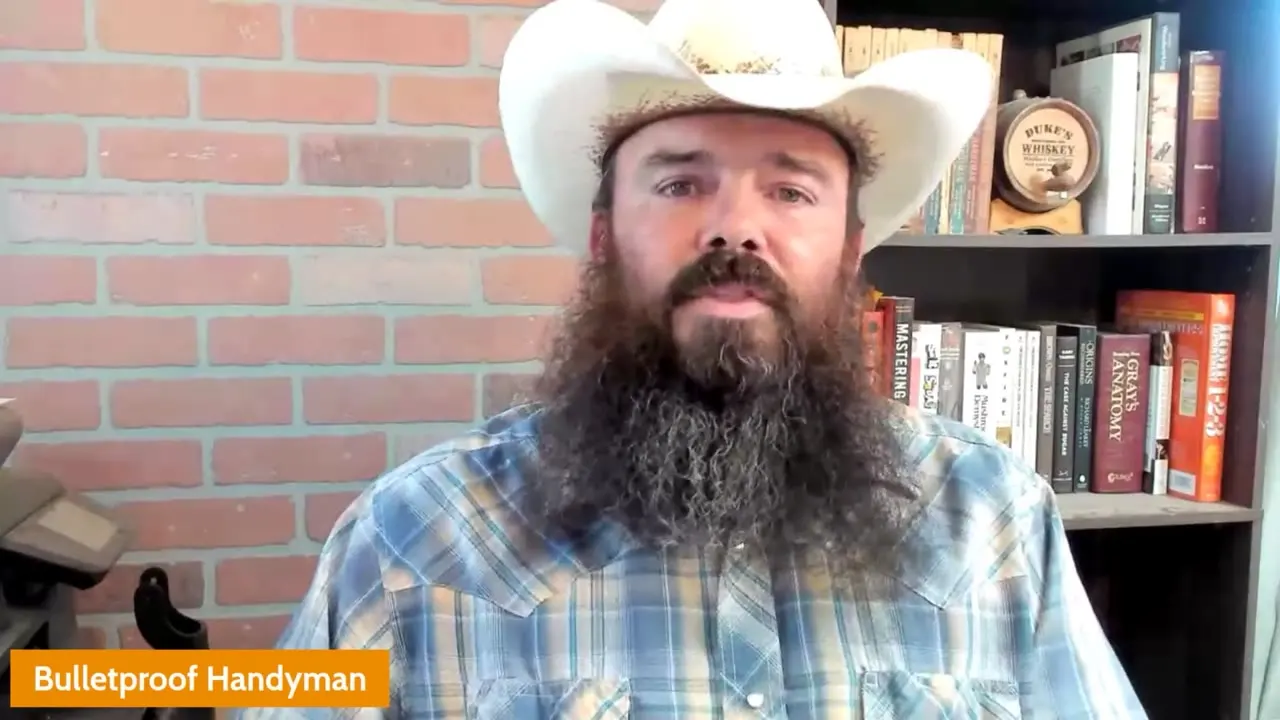
Ray made this mistake himself, and he calls it the one lesson to listen to if you skip the rest.
... what you're going to find out is going to happen to you is you're going to make some money and you're going to think, don't forget, we got to pay taxes later. Make sure you keep making more money and set some of that aside next week or the week after for those taxes. And bills come up and things come due and you need tools and all of this stuff goes wrong and your car breaks down.
And you put it off and you put it off and it snowballs. And I promise you, it will grow to consume everything.
But really, do not let your taxes be a second priority. Your taxes need to be a top of the line first priority from day one. Pay them before you pay yourself. Pay them before you pay your suppliers. Pay them before you pay anybody. Pay the IRS. Do not let yourself get behind.
Do you have to pay estimated tax?
The IRS's general rule for 2026 (Form 1040-ES): you must pay estimated tax if both of these are true.
- You expect to owe at least $1,000 in tax for 2026, after subtracting your withholding and refundable credits.
- You expect your withholding and refundable credits to be less than the smaller of 90% of the tax on your 2026 return, or 100% of the tax on your 2025 return (your 2025 return must cover all 12 months).
- Exception: you don't have to pay estimated tax for 2026 if you were a U.S. citizen or resident for all of 2025 and had no tax liability for 2025.
2026 due dates
The IRS splits the year into four payment periods. You can pay it all by April 15, or in four equal amounts:
- If a due date falls on a weekend or legal holiday, a payment made the next business day is on time (IRS).
- For 2027, check the new Form 1040-ES when the IRS posts it.
- April 15, 2026: First payment. Or pay the whole year's estimate at once on this date.
- June 15, 2026: Second payment.
- September 15, 2026: Third payment.
- January 15, 2027: Fourth payment. You can skip it if you file your 2026 return by February 1, 2027 and pay the whole balance with it.
The safe harbor: how to avoid the penalty
You generally won't owe the underpayment penalty if what you paid during the year (estimated payments plus any withholding) covers the smaller of these two:
- Also safe: owing less than $1,000 after withholding and credits. Source: IRS Estimated taxes and Form 1040-ES (2026).
- 90% of this year's tax: Hard to know until the year ends, which is why a weekly set-aside helps.
- 100% of last year's tax: Easy to know: it's on last year's return. Pay a quarter of it each due date.
- 110% if you earn more: If your 2025 adjusted gross income was over $150,000 ($75,000 if married filing separately), use 110% of last year's tax instead of 100%.
Why the bill is bigger than new handymen expect
On top of income tax, you owe self-employment tax: Social Security and Medicare, both halves. The 2026 Form 1040-ES worksheet figures it like this: take 92.35% of your net profit, then 12.4% Social Security tax (on earnings up to $184,500) plus 2.9% Medicare tax. You get to deduct half of that self-employment tax when you figure your income.
There's no employer paying half of your Social Security taxes. There's no employer providing you with health insurance.
You have to pay 15% is about what it comes out to for FICA. That's your Medicare and Social Security.
Set the money aside the day you get paid
The Master Class bookkeeping lesson gives the rule: “Keep a separate account for taxes and transfer 25–30% of income into it automatically.” Ray's point is that you should know this number for your own business, and that quarterly payments are a good way to keep up.
What percentage of the revenue that you bring in, what percentage of that revenue is getting set aside for taxes and whatnot? What are your numbers?
And then as far as doing taxes quarterly or yearly, that's your call. I think quarterly is a good way to do them.
- Open a separate tax savings account: Keep it apart from business checking so the money doesn't look spendable.
- Move your set-aside on every deposit: Use the Master Class rule of 25–30% of income until your CPA gives you your own number. Set it up as an automatic transfer if your bank allows.
- Pay each quarter from that account: On each due date, pay the IRS from the tax account. A quarter of last year's total tax is the simplest safe-harbor target.
- Check in with your accountant every quarter: Have them look at your books and adjust the amount up or down.
Let an accountant keep you current
The Master Class lesson puts it the same way: at minimum you'll need a CPA to do your taxes once a year, and you may want to consider paying quarterly too.
Many of them are going to have monthly programs where you can pay them like $25 a month and they'll go through and sort of sort all of your expenses on a monthly basis. That way, when it's time to file quarterly or annually, all the paperwork's basically done.
How to pay the IRS
- Your IRS online account at IRS.gov/account: make payments and see your payment history.
- IRS Direct Pay: an online transfer straight from your bank account.
- EFTPS: some business payments still go through it.
- By mail: send a check with the Form 1040-ES payment voucher.
- All options: IRS.gov/Payments.
If you fall short
- If you don't pay enough during the year, you may owe an underpayment penalty, even if you end up due a refund (IRS).
- Form 2210 shows whether you owe the penalty.
- If your income came in unevenly, you may lower the penalty by annualizing your income. See Publication 505.
- The IRS can waive the penalty after a casualty, disaster or other unusual circumstance.
Questions to ask your CPA
Checklist
- What percentage of each payment should I move to my tax account?
- Should I use the 100% (or 110%) of last year's tax safe harbor, or estimate this year's tax?
- Does my state also want estimated payments? When are they due?
- I just started this year and had no tax last year. Do I owe estimated payments yet?
- My income is seasonal. Does annualizing my income help me?
- Should I elect S-corp status, and how would that change my quarterly payments?
Step-by-Step
- Check if you must pay — If you expect to owe $1,000 or more in tax for the year after withholding and credits, you generally must pay estimated tax.
- Open a separate tax account — Keep tax money apart from business checking.
- Move a set share of every deposit — The Master Class rule is 25 to 30 percent of income; your CPA can set your own number.
- Pay on the four due dates — For 2026: April 15, June 15 and September 15, 2026, and January 15, 2027.
- Aim for the safe harbor — Pay at least 90% of this year's tax or 100% of last year's (110% if your AGI was over $150,000).
- Review each quarter — Have your accountant check your books and adjust the set-aside.
Frequently Asked Questions
When are 2026 estimated tax payments due?
April 15, June 15 and September 15, 2026, and January 15, 2027. You can skip the January payment if you file your 2026 return by February 1, 2027 and pay the full balance.
How much should a handyman set aside for taxes?
The Master Class bookkeeping lesson says to move 25 to 30 percent of income into a separate tax account automatically. Your CPA can tell you the right number for your business.
What happens if I skip quarterly payments?
The IRS may charge an underpayment penalty, even if you get a refund. Ray's warning is that unpaid taxes snowball, so pay them before you pay anyone else.
How do I avoid the underpayment penalty?
Pay during the year at least the smaller of 90% of this year's tax or 100% of last year's tax (110% if your prior-year AGI was over $150,000), or owe less than $1,000.